Getting the Hang of Preparing Yarn for Textile Excellence
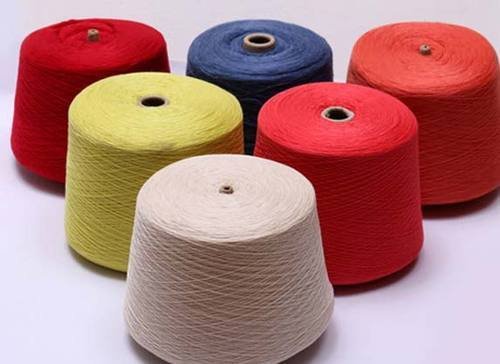
First of all, Yarn preparation is an essential first step in the complex world of textile manufacturing, setting the foundation for the production of high-quality fabrics. This procedure is the foundation upon which the entire textile industry is formed, however it is sometimes disregarded in favor of more visible processes like knitting or weaving. Yarn preparation is both an art and a science, involving everything from hand-picking the finest fibers to painstakingly molding them into skeins with the right qualities. This essay seeks to explore the intricacies of yarn preparation, elucidating its importance, methods, and artistry.
Comprehending Yarn Preparation:
Yarn preparation is the set of actions conducted in advance to convert unprocessed fibers into yarns fit for knitting or weaving. It includes a number of procedures meant to improve the yarn’s consistency, strength, and quality. Making ensuring the final yarn satisfies the precise specifications of the desired fabric in terms of texture, strength, or appearance is the main goal of yarn preparation.

Fiber Selection and Blending:
The meticulous selection of raw fibers is the first step in the preparation process for yarn. A variety of fibers have different qualities and features, such as natural fibers like cotton, wool, and silk and synthetic fibers like polyester, nylon, and acrylic. By blending various fiber kinds or grades, yarn manufacturers can achieve desired yarn properties like color uniformity, strength, and softness. Blending improves yarn performance and allows the use of easily available or reasonably priced fibers.
Carding and combing:
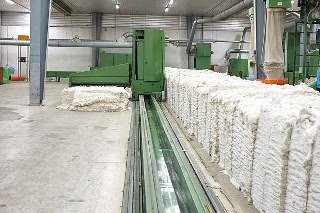
The fibers are aligned, contaminants are removed, and consistent strands fit for spinning are produced by the carding and combing procedures, which are applied after the fibers have been chosen and combined. During the carding process, the fibers are passed through a succession of revolving drums that have fine wire teeth on them. These teeth separate and straighten the strands into a narrow web called a sliver. Combing is a more sophisticated procedure that produces a smoother and finer sliver with fewer short fibers and contaminants. It is often employed for long-staple fibers like wool.
Drawing and Roving:
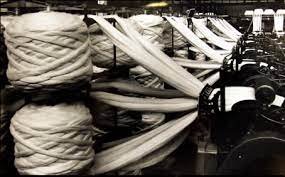
To further refine and lengthen the fibers prior to spinning, the sliver is subjected to drawing and roving procedures after carding or combing. To attain the required yarn thickness and consistency, the sliver is passed through a succession of rollers throughout the drawing process. These rollers stretch and thin the fibers. The pulled sliver is further attenuated in a second step called roving, which results in a finer, more uniform strand that is strung onto bobbins or spools in preparation for spinning.

Sizing and Lubrication:
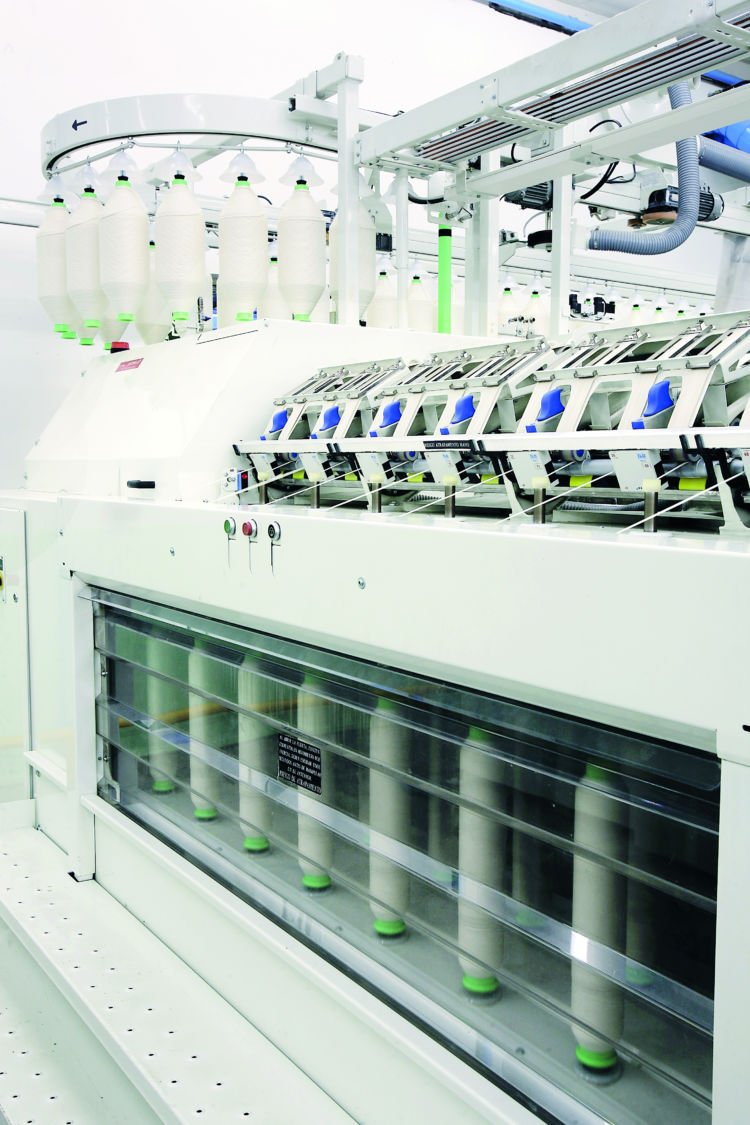
In order to enhance the roving’s handling and performance during spinning, it may get extra treatments prior to spinning, such as sizing or lubrication. Applying a thin layer of sizing agent usually starch or a synthetic compound to the roving improves its cohesiveness and lowers the likelihood of fiber breakage during spinning is known as sizing. Contrarily, lubrication entails applying lubricants or anti-static compounds to the roving in order to reduce friction and the accumulation of static electricity during spinning, guaranteeing smoother yarn production.
Quality Assurance and Control:
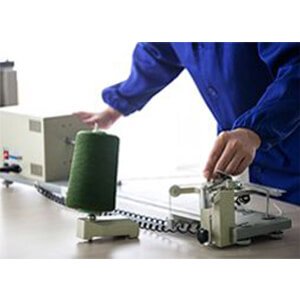
Strict quality control procedures are used to keep an eye on and preserve the consistency and integrity of the yarn during the preparation process. Monitoring fiber blend ratios, evaluating roving and sliver consistency, and testing yarn strength and elongation qualities are a few examples of quality control procedures. Only the best yarns are created thanks to the use of cutting edge technology like spectroscopy, computerized testing apparatus, and automated monitoring systems, which allow manufacturers to spot and correct flaws or irregularities in real time.
In summary, yarn preparation is the essential cornerstone that supports the entire textile manufacturing process. Every stage of the yarn preparation process, from the careful selection and mixing of raw fibers to the methodical carding, combing, drawing, and roving procedures, adds to the production of yarns with exceptional quality and performance. Textile makers create garments that are not only aesthetically pleasing but also long-lasting, cozy, and functional by perfecting the technique of yarn preparation. Yarn preparation is still a living example of the textile industry’s persistent innovation and artistry in the ever-changing field of textile technology.
Keywords: Yarn preparation, fiber selection, blending, carding, combing, drawing, roving, sizing, lubrication, quality control, textile manufacturing.